|
The Seger File
-- Introduction
He was born in
Detroit.
At night, he
stayed up late listening to a faraway radio
station. On a transistor radio and an earplug,
he heard James Brown, Garnett Mimms, Little
Richard, Wilson Pickett, Otis Redding and
others.
He liked James
Brown more than the Beatles. His favorite album
was James Brown Live at the Apollo, Volume
1.
He was a good
student in high school and could run a 5:05 mile
-- until he discovered rock and roll.
He began
staying out all night with his friends, cars
circled in a farmer's field, listening to music
on the car radios.
He formed a
band. The applause at the Junior Prom changed
his life.
In 11th grade
he was playing bars three nights a
week.
The first song
he wrote was titled, "The Lonely
One."
In 2006 he
played for nearly a million fans across the
country.
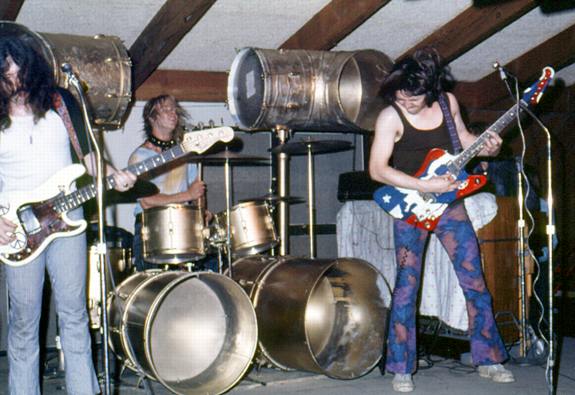 - Dan
Honaker, Pep Perine, Bob Seger play the Mt.
Holly Ski Lodge north of Pontiac,
Michigan.
For ten years, he was a regional
phenomenon.
By 1968, he
had five Top Ten singles in the Detroit market.
He was unheard of outside Michigan, Florida,
Pennsylvania and a few other Midwest markets --
but in Detroit, his records outsold the
Beatles.
He was on the
verge of breaking the national charts in 1967
when the record company promoting his single
went bankrupt.
The first
major label to offer him a contract was
Motown.
He broke the
Top Forty with a single in 1968, then survived
seven years without a successful
record.
His work ethic
became a local legend. He played 260 dates in
1975.
In the early
'70s, he and his band drove 25 hours to Florida,
played three straight nights, and then drove 25
hours back, because they couldn't afford motel
rooms. He considered himself more a driver than
a singer at the time.
His mother
taught him never to go into debt.
In June 1976,
he played in front 50 people in a Chicago bar.
Three days later, he played in front of 76,000
devoted fans in the Pontiac Silverdome outside
Detroit.
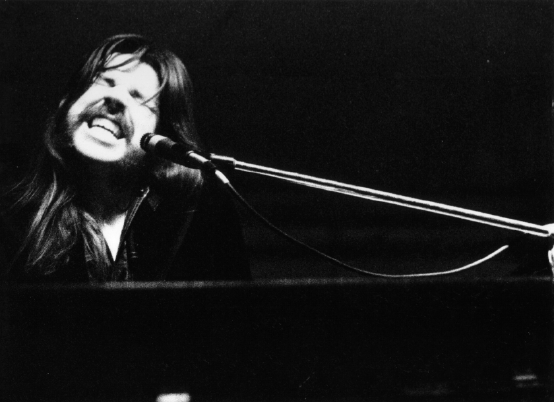 - Bob
Seger at the Primo Showbar,
Ann Arbor,
Michigan, December
1973
- Photo
by Scott Sparling
For
those of us under his spell, he posed the two
greatest questions in rock 'n' roll:
Doncha ever listen to the radio? and Do
ya do ya wanna rock?
He wrote the
first anti-war rock song of the Vietnam
era.
He wrote about
Lucy Blue, Chicago Green, Already Eddie and
other characters long before Springsteen created
Crazy Janey and her mission man.
His songs, he
thinks, reflect a certain morality... "what
happens when you do it wrong and when you do it
right."
The characters
in many of his songs don't find the satisfaction
or fulfillment that they thought their dreams
would hold. They end up "stuck in heaven,"
listening to the sound of something far away --
a bird on the wing, the sound of thunder. They
think back on the promise of younger years,
surprised at the passage of time. Only
occasionally do they find renewal. More often,
they try to make some moment last; they watch it
slipping past. The light fades from the screen.
They wake up alone. Next time, perhaps, they'll
get it right.
- Somehow,
at the same time, his music manages to be
incredibly life-affirming, celebratory and
uplifting.
-
He
was born lonely down by the
riverside.
He went
cruising on his gray snake till his dying
day.
He even sang
the parts the instruments were
playing.
He knows the
devil is red, but his money is green.
His '60
Cadillac went cruising through Nebraska,
whining.
He woke one
night to the sound of thunder.
He wishes he
didn't know now what he didn't know
then.
They used to
call him reckless, they used to call him
fast.
After twenty
years, he saw himself again.
He's
recorded 16 studio albums and two live albums
spanning nearly 40 years.
He was greatly
influenced by early advice from Freddy "Boom
Boom" Cannon, who said, "Do your best, 'cause
it's only gonna last two or three
years."
He's a
perfectionist who spends months in the studio
fixing problems no one else can hear. He's a
Taurus and "you can't move him with a crane."
Or, he lets people walk all over him.
He's had one
Number 1 single and one Number 1
album.
He admires
Leonard Cohen, Tom Waits and Joni
Mitchell.
He believes
his rock and roll savagery was tempered for many
years by the need to produce mainstream
records.
He has sold
nearly 50 million albums.
One of his
most heartfelt songs became the basis of one of
the most successful ad campaigns in recent
history.
He has
"a voice that inspires trust."
He "exudes the
brawny vocal friendliness of an American
Everyman, but with a deep and special connection
to soul music."
He "has all
the requisites of greatness: the voice, the
songwriting, the performance onstage, the vision
and the ambition."
He recorded
ten consecutive million-selling albums between
1975 and 1995.
He's been called the nicest rock star.
Sometimes he feels like knocking you down, but
he could never pull that scene.
In live
performances, he displays "an embracing
friendliness that transcends the normal barriers
between rock performer and audience."
He played in
front of 923,829 fans in 1996, making him the
fourth most popular touring act of the
year.
He's a father.
His kids, he
says, "are the best thing that ever happened to
me."
His father
left when he was ten.
In "Golden
Boy," he sings, "I'll be there for
you."
He still lives
in Michigan.
-
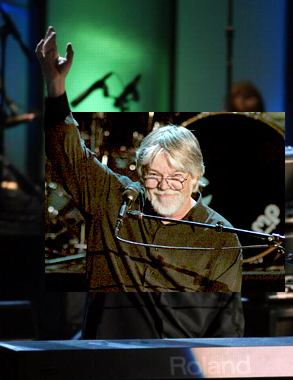
Hall-elujah!
Always
in our hearts, now Seger's in the
Rock & Roll Hall of Fame.
Doncha
ever feel like going insane?
It's official. Seger's in.
It's
for the 250 gigs a year across
the midwest. It's for
ten
straight (soon to be eleven
straight) platinum and
multiplatinum albums, 19 Top-40
singles, nearly a million ticket
sales during the '96 tour
and
nearly 50 million albums sold
worldwide.
It's
for seven years without a hit but
without
a
hint of giving up.
But
it's also for that one song that
got you through the worst night
of your life, or the concert
where you just couldn't stop
smiling, or the one lyric you are
never going to forget. It's for
the person you met at the Seger
concert, it's for the famous
Seger smile and the lonesome
highway east of Omaha. It's for
the pure raucous joy of it
because when Seger is playing the
answer to do you do you wanna
rock is yes. It's for the
music. And, yeah, it's about
time.
|
Go
to the Seger
File Main
Menu Go
to the Current
News and Updates
Page Go
to the Current
News and Updates
Page
-
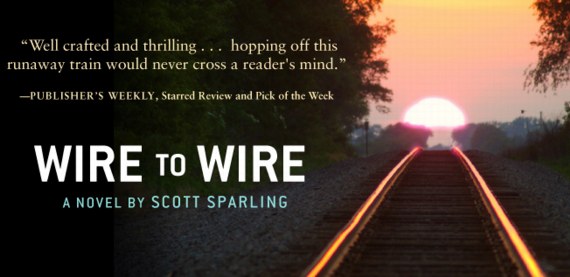 -
- Also
by the author of the
Segerfile
|